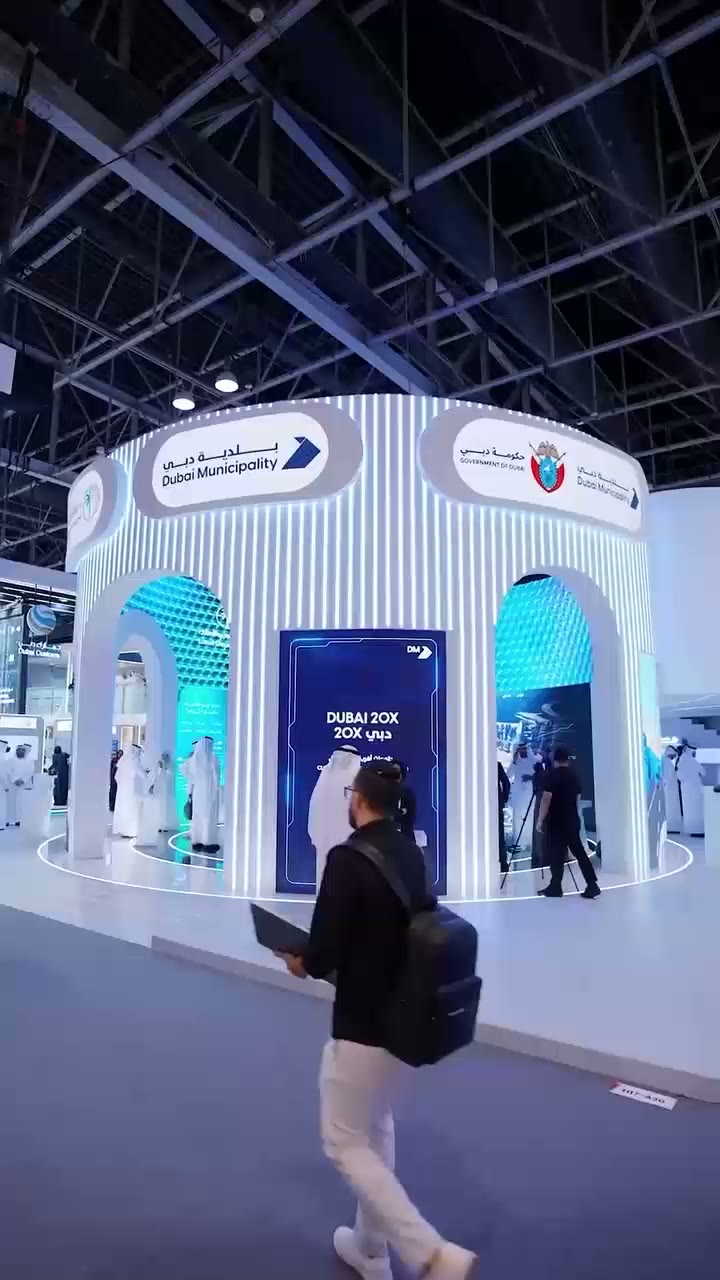
There is a predictable sequence to most exhibition projects. The stand is designed. The build is contracted. The graphics are signed off. And then, a fortnight out, someone asks what is going on the screens.
By that point the options have narrowed to whatever can be cut down from an existing corporate film.
Start from the stand drawings
The stand drawings already contain most of what content needs to know: how many screens, what size, where they sit, what someone can see from the aisle and what they can only see once they are inside.
A screen at the back of a meeting area is doing a completely different job from one facing the walkway. One supports a conversation that is already happening. The other has to start it.
Build a screen schedule, not a video
Instead of commissioning "a video", list every screen and what it is for:
- Aisle-facing hero screen - stop the walk-past, no audio, readable in four seconds
- Demo screens - support a conversation, can be slower and more detailed
- Presentation backdrop - must not compete with the person speaking in front of it
- Holding content - what plays during quiet periods and between sessions
Planned together, these share a visual language and a production pass. Commissioned separately and late, they look like four unrelated files, because that is what they are.
Assume nobody can hear it
Exhibition halls are loud. Neighbouring stands run their own audio, announcements cut across, and most visitors will never be close enough to hear yours anyway.
Content that depends on a voiceover to make sense will not make sense. The message has to carry visually - through type, structure and pacing - with audio treated as an enhancement for the few who get close.
Design for the loop, not the play
A stand screen does not play once. It plays for eight hours, then does it again the next day. Staff stand next to it the entire time.
That changes what good looks like. Hard cuts back to the start get noticed on the twentieth repeat. So does anything that feels frantic. Content that loops cleanly and breathes is easier to stand beside for three days - and your team's fatigue with it is visible to visitors.
The earlier you start, the more you can do
Early in the timeline, 3D, custom animation and filmed material are all on the table. Late in the timeline, you are editing what already exists.
Nothing about the budget changes this - it is purely a function of when the conversation starts. If you are exhibiting soon, our exhibition stand video content page explains how we work from stand drawings through to show-day delivery.